
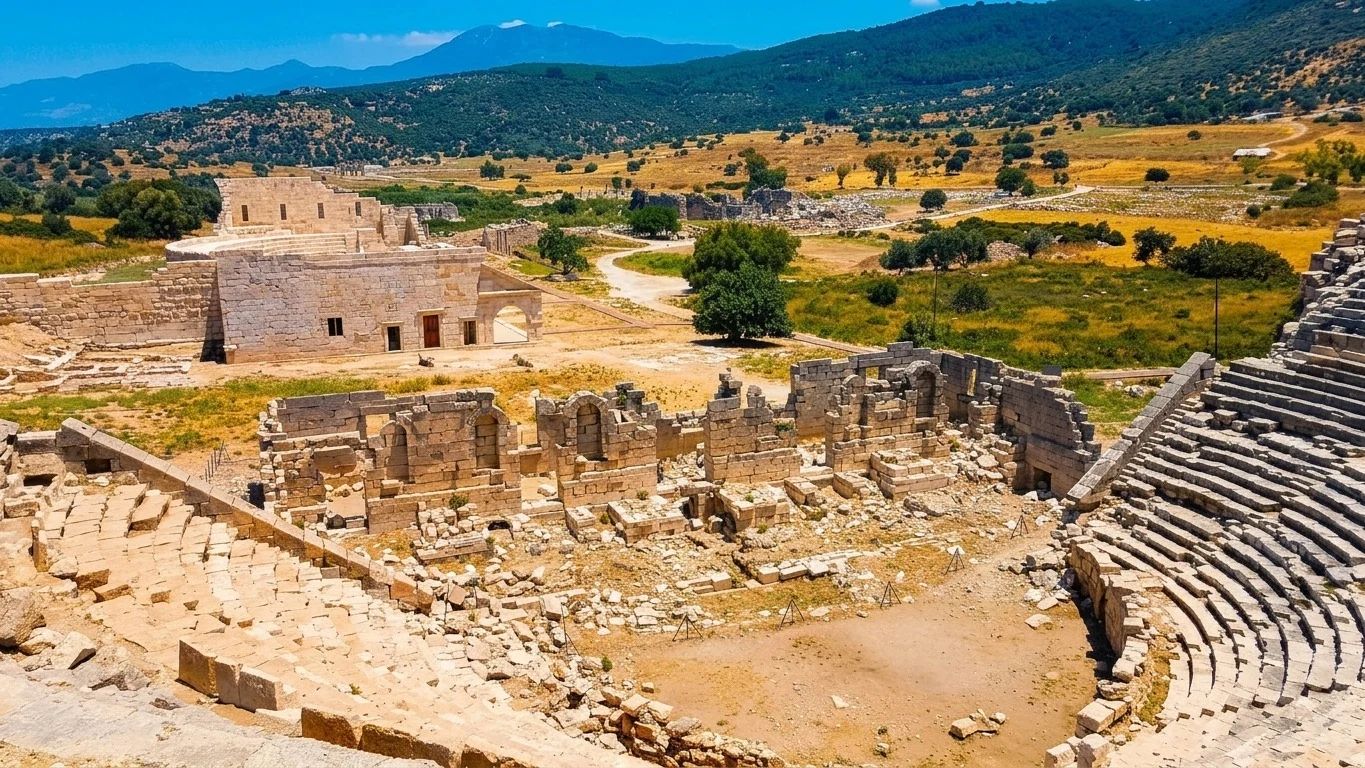
Capital of the Lycian League
The town is mentioned as early as 13th-century BC Hittite texts under the name Patar. Later Patara became the capital of the Lycian League, a union of cities that included Myra.
Patara was a major port. The Acts of the Apostles describe how the apostle Paul changed ships at Patara for one bound for Phoenicia. And Eudemus, bishop of Patara, was the only representative of Lycia to sign the decisions of the Council of Nicaea in 325.
The birthplace of St Nicholas
The ministry's official listing says plainly that St Nicholas was born in Patara. He later became bishop of Myra, so a pilgrimage in his footsteps naturally links Patara and Demre.
What to see in the ancient city
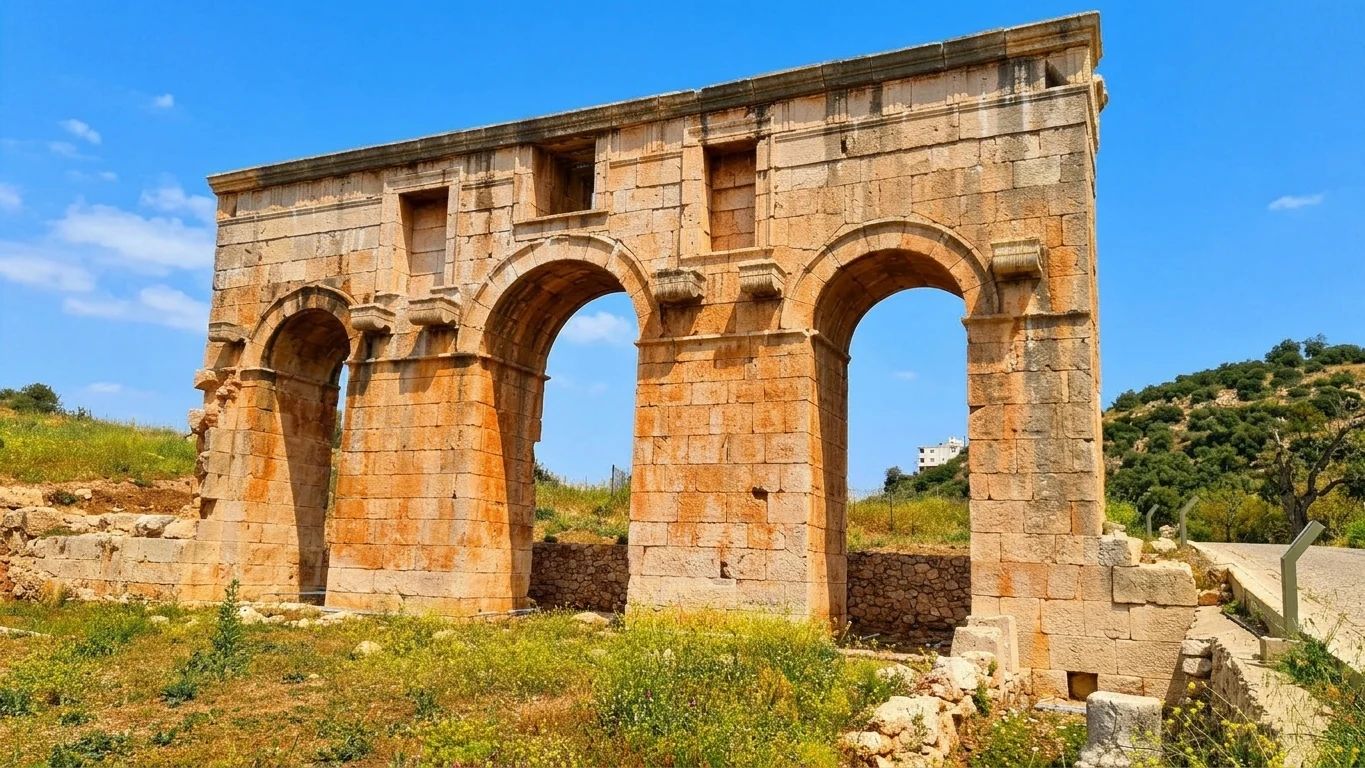
A visit usually starts at the entrance arch: according to its inscriptions it was built by the provincial governor in 100 AD. From there the main street leads to Kurşunlu hill.
By the hill stands the theatre, rebuilt after the earthquake of 147 AD, and next to it the bouleuterion, the building where the council of the Lycian League met. Patara also preserves the Baths of Vespasian, a Corinthian temple, a granary built under the emperor Hadrian and his wife Sabina in the 2nd century, and a necropolis with Lycian sarcophagi.
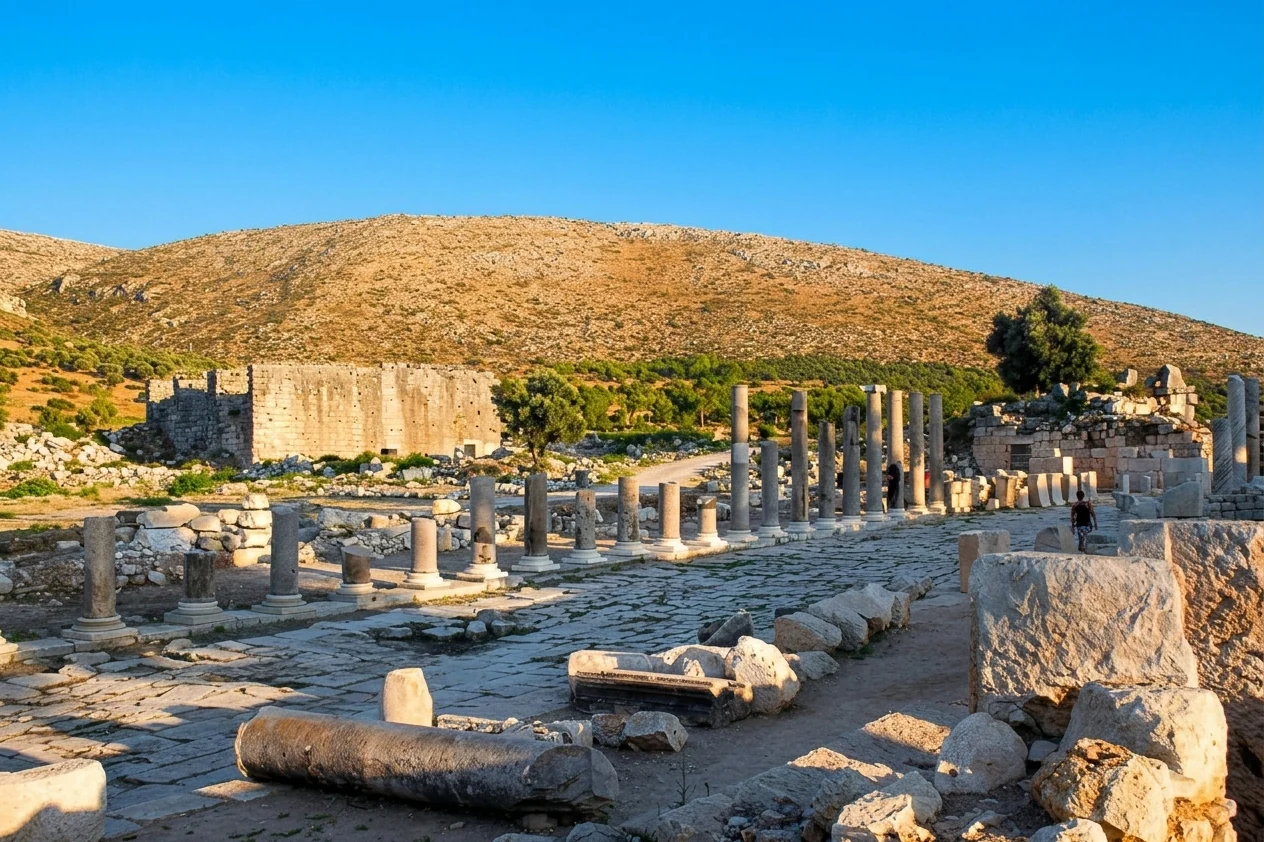
The colonnaded street
A paved street with columns in the archaeological area of Patara.
The bouleuterion and the theatre
The rows of the bouleuterion, where the council of the Lycian League met, and the theatre by the hill.


Patara beach and the turtles
A sandy beach about 18 km long begins next to the ruins. It is one of the rare nesting sites of loggerhead turtles, and the beach is protected: it is open from 8:00 to 20:00 and there is an entrance fee.
Do not leave holes or litter in the sand, and keep away from the fenced nests; the wardens and signs on site give the rules.

Visiting
The site's address is Gelemiş Mahallesi, Örenyeri Sokak No:1, Kaş. According to the ministry, Patara is open daily and has an audio guide. Hours change with the season, so check them in the listing or call before you go.
The ruins cover a large area with little shade: bring water, a hat and comfortable shoes. From Demre it is a full-day trip, back in the evening.