

Antiphellos: the port opposite the stony land
The town's Lycian name was Habesos (Habesa). The Greek name Antiphellos means the place opposite Phellos: Phellos, the stony land, was an ancient town in the hills to the north, and Antiphellos was founded as its port. A settlement here is known from at least the 6th century BC.
In the Hellenistic period, when Phellos declined, Antiphellos grew rich on trade, and in Roman times it became an important port. Most of the ancient town lies under modern buildings, which is why the theatre, the sarcophagus on Uzun Çarşı and the rock tombs stand out so clearly.
The theatre: 26 rows and the sea instead of a stage
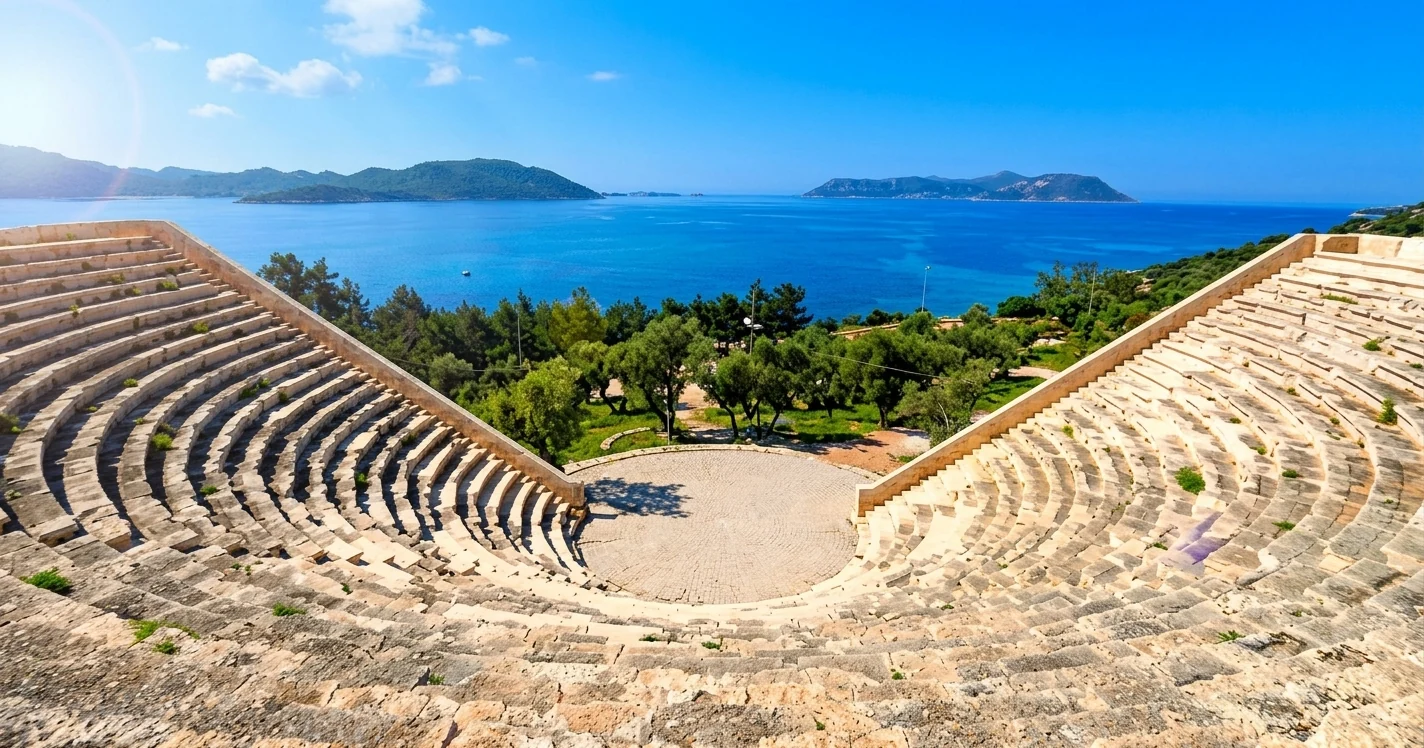
The theatre was built on a Hellenistic model: it has 26 rows of seats and no stage building. So behind the area where the actors performed, the sea and the islands open up at once; that view is why people come.
The rows of the theatre
The stone benches of the Antiphellos theatre. Sitting on them and looking at the sea is part of the visit.

The rows are stone and open to the sun. The best times are morning or late afternoon, when the stone is less hot; at midday in summer there is almost no shade.
Antiphellos theatre

The tomb with 24 female figures
North-east of the theatre a tomb is cut into the rock, set apart by its reliefs: 24 female figures. Like the design of the façade, they are dated to the 4th century BC.
The tomb is easy to miss if you only head for the theatre. Ask for directions on the spot and check the path: not every approach to the rock monuments is maintained.
Getting there and what to combine it with
The theatre stands on the Çukurbağ peninsula near the centre: you can walk there from the harbour. Check access for your date on the spot; the official page does not describe it.
A good half-day route: the harbour, Uzun Çarşı street with the Lycian sarcophagus, then the theatre. In the evening you can go back to the harbour for dinner.