

Myra's harbour
The Ministry of Culture describes Andriake as Myra's harbour district and the third most important port in the region after Phaselis and Patara. Goods and people linking Lycia with the whole Mediterranean passed through it.
One such journey is described in the Acts of the Apostles: on his way to Rome the apostle Paul arrived at Myra in Lycia, and here the centurion found an Alexandrian ship sailing for Italy. Myra's harbour was Andriake.

The granary and the Museum of Lycian Civilizations
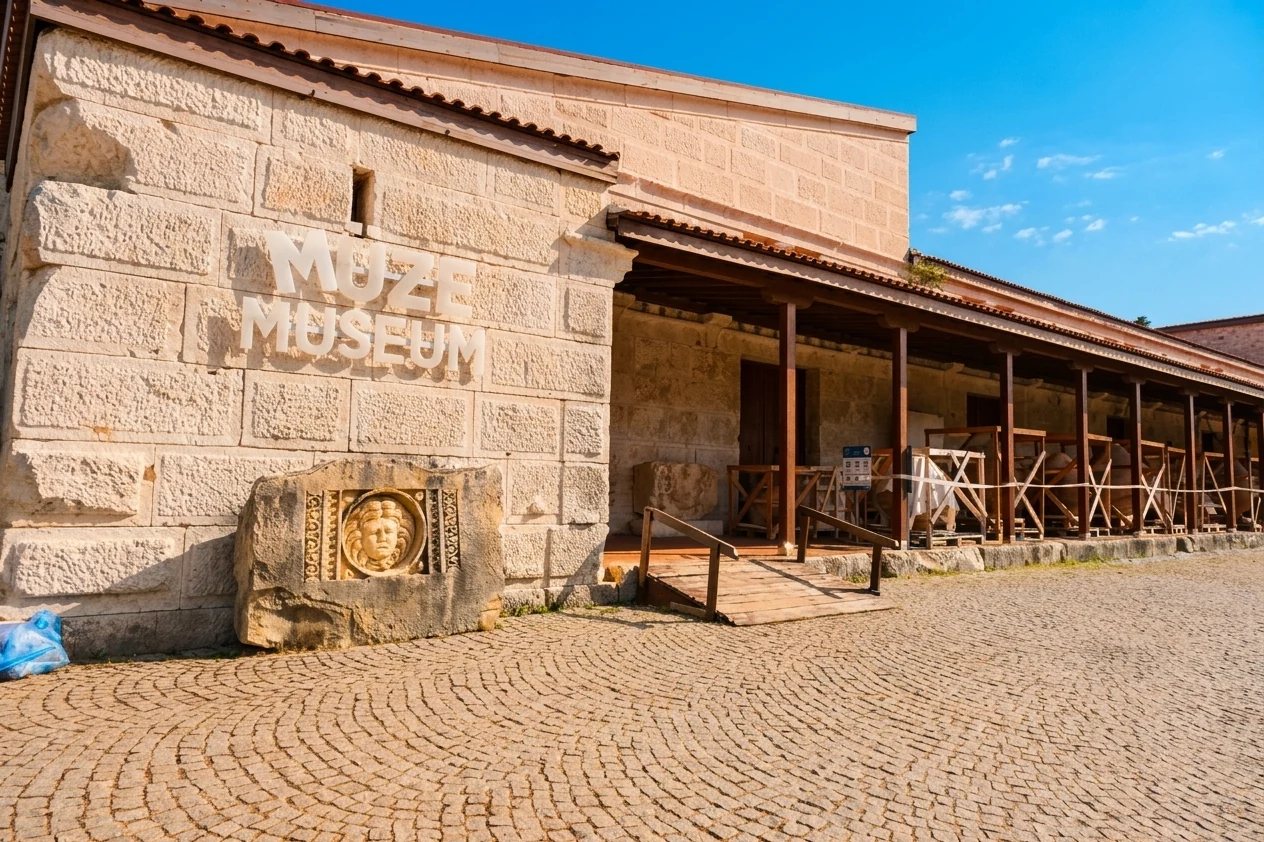
Andriake's main building is the granary, a large stone grain store. It shows how important the grain trade was to the port. Today the granary houses the Museum of Lycian Civilizations.
The museum covers Lycia as a whole, so it is a good place to start a trip round the region: afterwards the tombs of Myra, the theatre in Kaş and the ruins of Kekova are easier to understand. In early November 2026 the museum was open, as the project owner confirmed on a personal visit.
Museum of Lycian Civilizations

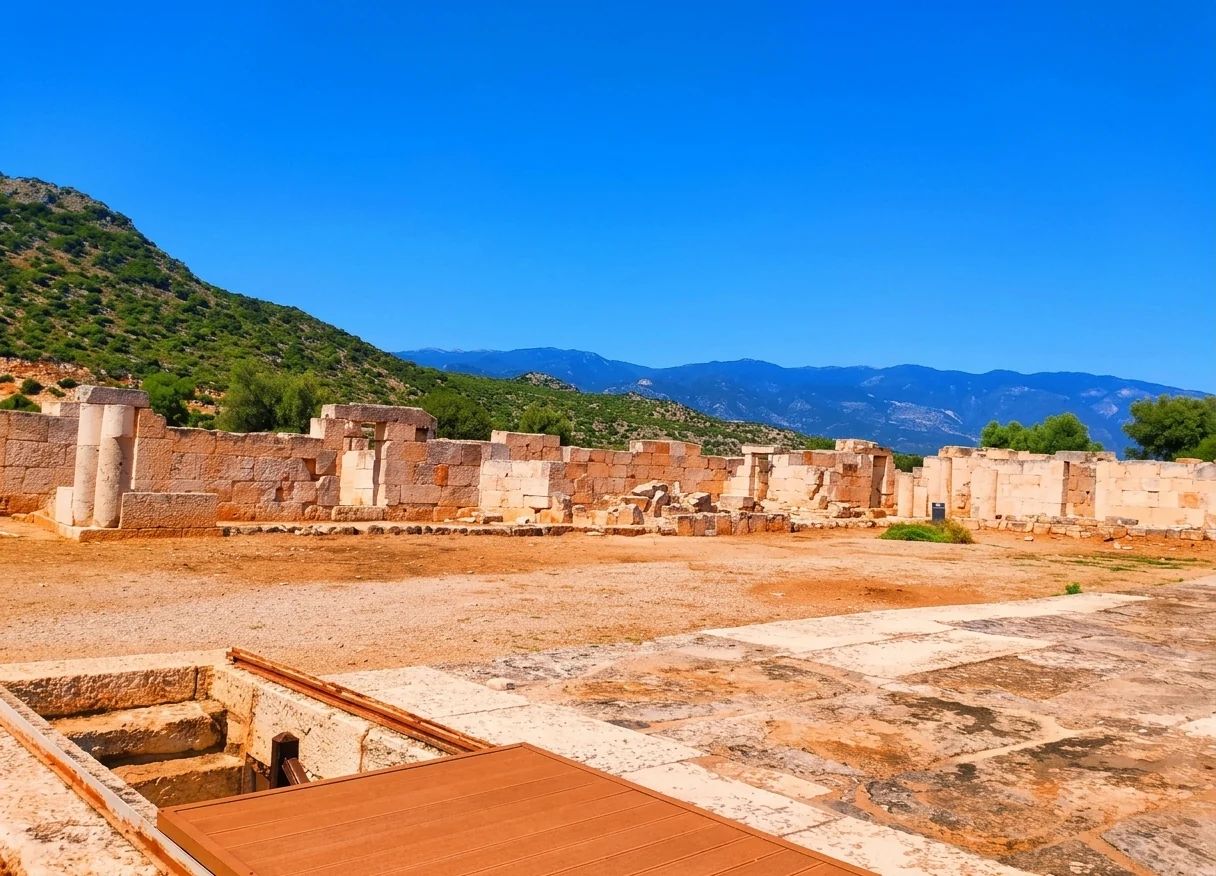
The agora, the cistern and the ruins of the port
Around the granary survive the agora, a cistern, town walls, aqueducts, monumental fountains, baths, watchtowers and Byzantine churches. Lycian tombs stand in the old necropolis.
The archaeological site is large and open. Start with the granary and the agora, then decide how much energy you have left for the outlying ruins: in summer it is hot and there is almost no shade.
Purple-dye workshops
Workshops have been found at Andriake where purple dye was made from murex shellfish. Cloth of this colour was worn by emperors and the elite.
The shells were not thrown away after use: they were crushed and added to building mortar. So the port did not only store goods; it also made dye.
The synagogue
Among Andriake's buildings is a synagogue dated to the 5th century AD. According to the ministry, it is the first direct evidence of a Jewish community in Lycia.
Visiting and combining it with the beach
The ministry's listing gives the address as Büyükkum Mahallesi, Demre, and says the site is open daily. Hours change with the season, so check them in the listing before you go or call the number below.
After your visit it is easy to stay by the sea: next door is Çayağzı harbour, where boat trips to Kekova leave, and Demre's beaches. Andriake, the museum and the shore are plenty for a whole day.


Mehmet's tips
Personal experience of the author, who grew up in Demre.
If you are short of time
Go straight to the Museum of Lycian Civilizations. It is in a huge 2nd-century Roman granary, and the displays tell the story of the Lycian League, sea trade and the purple dye made from murex shells. Allow at least 40–50 minutes for the museum.
Where to have lunch
Along the canal in Çayağzı harbour there are a few simple fish restaurants looking over the water. Nothing fancy, but the fish is cooked honestly: have grilled sea bream (çipura) or sea bass (levrek), a salad and meze.
Nearby
- Boats to KekovaTrips to the sunken city leave from Çayağzı harbour next door.
- ≈3.3 kmChurch of St NicholasThe Byzantine church in central Demre.
- ≈4.4 kmAncient MyraThe city this port belonged to: the tombs and the theatre.
- Santa SuitesA hotel in central Demre, next to the Church of St Nicholas.
Distances are in a straight line; by road it is further.
Frequently asked questions
What is Andriake?
The harbour district of ancient Myra, at a river mouth where Çayağzı is today. Goods and people passed through it; it was one of the main ports of Lycia.
Where is the Museum of Lycian Civilizations?
In the granary, the port's large stone grain store. The museum covers Lycia as a whole, so it is a good place to start your trip.
Is Andriake open in winter?
The ministry's listing says the site is open daily; in early November 2026 the museum was open, as the project owner confirmed on a visit. Hours are seasonal: check them or call +90 242 871 60 02.
Can I combine Andriake with the beach?
Yes: Çayağzı harbour and the beach are next to it. The museum, the ruins and the shore together fill a whole day nicely.
How long does a visit take?
An hour and a half to two hours for the granary, the museum and the agora. The site is large and open, so in summer start early. This is our suggestion.